
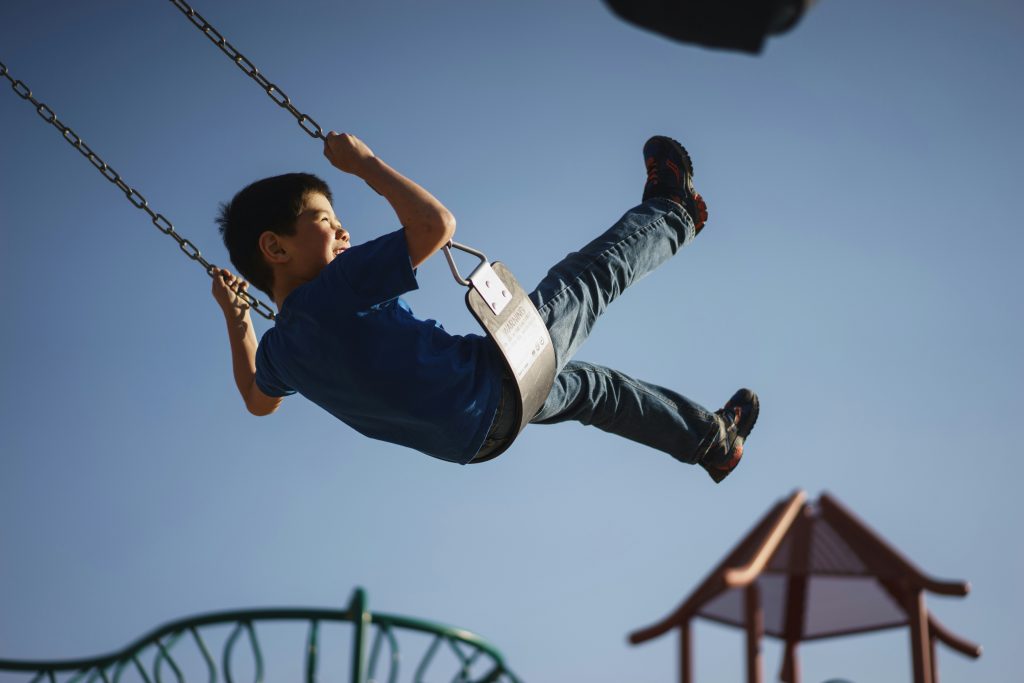
Outdoor and active play are essential for the development of kiddos throughout childhood. For children in early education settings, they can be great learning opportunities, too. At Children’s Learning Centers of Amarillo, we understand that outdoor and active play are just as important as academics.
When young children go outside, they step into a vibrant classroom without walls. Beyond simply burning off energy, time spent outdoors shapes how children grow, think, and interact with the world. Here’s how our team at CLC prioritizes outdoor play in our programs, how it supports your child’s overall well-being, and how you can encourage more active play at home!
Benefits in a school setting
There are many benefits your child can experience from participating in active play and enjoying the outdoors. In an early education environment, the playground is much more than a place for recess. It serves as a vital extension of the classroom.
We center our approach on whole-child development and a play-based curriculum. When children play outside together, they experience social-emotional growth, learn how to share space, take turns, and collaborate. An outdoor learning environment naturally encourages children to communicate and negotiate with their peers. Nature-based learning also sparks creativity. A simple patch of grass or a sandbox can become a bakery, a construction site, or a jungle.
Because Children’s Learning Centers of Amarillo maintains low teacher-to-child ratios, our educators can actively guide these interactions. We provide attentive care that allows children to safely explore their imaginations, all while building meaningful friendships and skills that last a lifetime.
Physical benefits
Moving freely in an open space is important for a growing body. Children who spend plenty of time playing outdoors develop stronger cardiovascular systems and build healthy bones and muscles.
Active play also directly supports gross motor development. When children run across the grass, jump over small obstacles, or climb on playground structures, they are mastering the coordination of their large muscle groups, balance, and agility.
Regular outdoor activity promotes a healthy weight and lowers the risk of childhood obesity. Plus, getting out in the sunshine allows their bodies to produce Vitamin D naturally, which is essential for developing strong teeth and a robust immune system.
Brain health
The benefits of outdoor play extend beyond physical fitness. Getting outside has a profound impact on a child’s cognitive development and mental well-being.
- Improved attention and behavior: Spending time in nature acts as a reset button for the brain. Children who engage in regular outdoor play show improved attention and better behavior when they return to the classroom. The fresh air and change of scenery reduce stress and fatigue, allowing children to focus more easily on structured tasks later in the day.
- Confidence and self-discovery: Outdoor play encourages healthy risk-taking. When a child decides to climb just a little bit higher on a structure or tries to balance on a wooden beam, they test their limits. Overcoming these small physical challenges builds immense self-confidence. They learn what their bodies are capable of doing, which fosters a strong sense of independence.
- Sensory engagement: Indoors, children typically use only their sight, touch, or hearing. Outside, they engage all their senses, often at the same time. They feel the rough bark of a tree, smell the rain on the pavement, and listen to the birds singing. This rich sensory input builds complex pathways in the brain, helping them process information more effectively as they grow.
Benefits at home
The value of outdoor play does not stop when the school day ends. Encouraging your child to head out into the backyard or to a local park brings wonderful benefits to your family life.
First, playing outside naturally leads to reduced screen time. Swapping tablets and television for a scavenger hunt or a game of catch keeps children active and engaged with the real world.
Next, active play at home also leads to better sleep. When children physically exhaust themselves through movement, they fall asleep faster and rest more deeply at night.
Finally, outdoor time provides an excellent opportunity for family bonding. Whether you are planting a small garden together or simply taking a walk around your Amarillo neighborhood, you are building memories and modeling a healthy, active lifestyle.
Safety
While we want children to explore and test their limits, keeping them safe remains our top priority. Whether you are at home or dropping your child off at our center, a few practical guidelines ensure outdoor play stays fun and secure.
- Hydration: Children often forget to drink when they are having fun. Always provide plenty of water to keep them hydrated, especially during the warm Texas months.
- Sun protection: Keep children cool by taking breaks in the shade. For children older than 6 months, we apply sunscreen with parental permission to protect their sensitive skin from harmful rays.
- Age-appropriate equipment: Ensure that the playgrounds you visit feature equipment designed for your child’s specific age group and have soft surfacing underneath to cushion falls.
- Protective gear: If your child loves riding tricycles, bicycles, or scooters, insist on proper helmet use every single time.
- Water safety: Splash pads and pools are great for cooling down, but they require close, constant supervision. Never leave a child unattended near water.
At Children’s Learning Centers of Amarillo, we believe that joyful, active play is the foundation of a great education. We are dedicated to providing your children with safe, engaging indoor and outdoor environments where they can grow physically, emotionally, and intellectually.
We are proud to serve families right here in Amarillo. Please contact one of our centers today to learn more about our play-based curriculum and ask about enrollment. Let’s help your child learn, play, and thrive!